
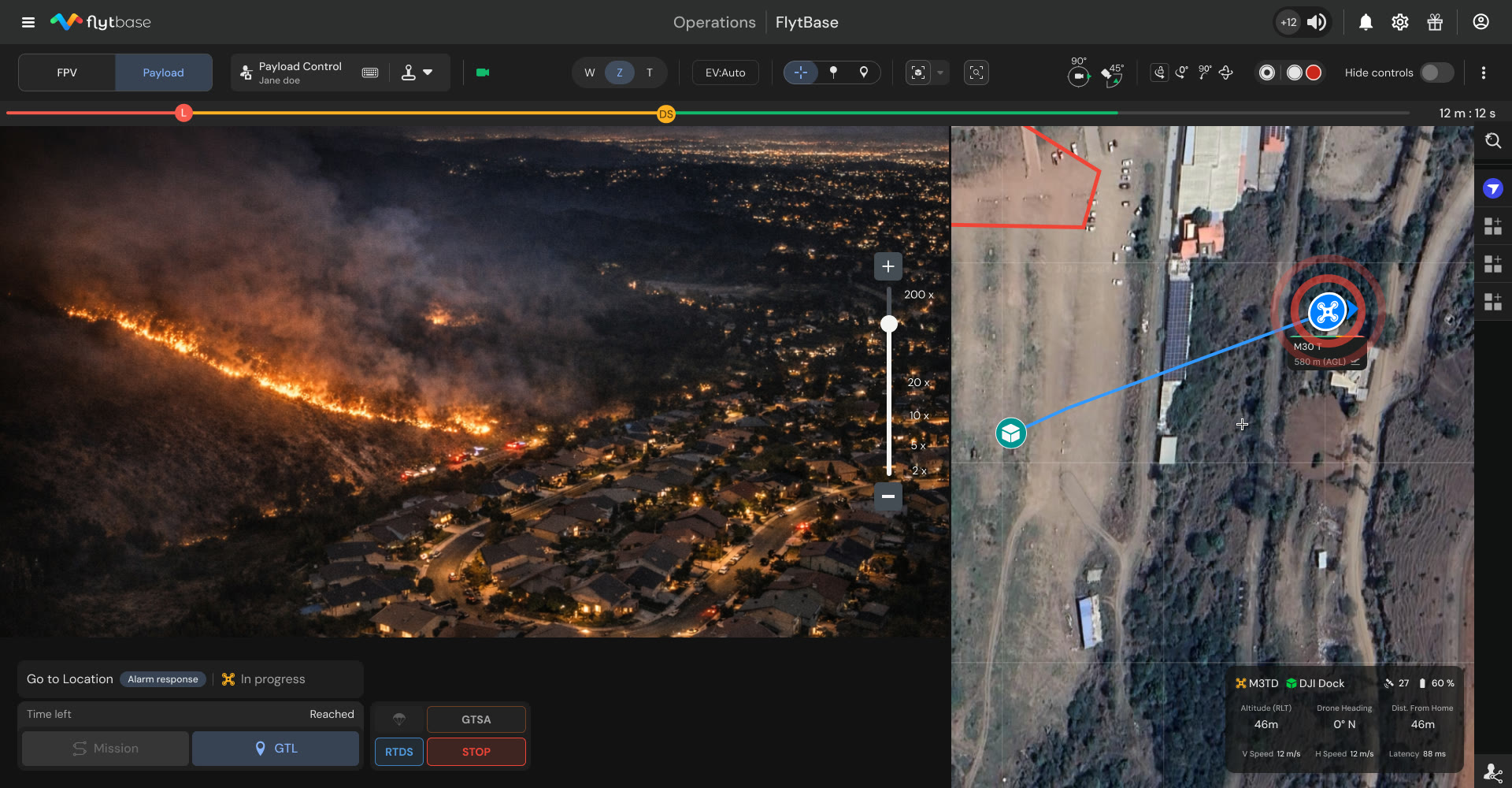
From raw signal to closedincident, in five layers.
Today, you ask the system what happened. This is the stack that gets it there, and the one that, over time, starts surfacing what you need before you ask.
Five layers, each doing one job.
- 01Sense
See everything, on every site.
Docked drones, ground sensors, thermal and the cameras you already have, all capturing continuously. Nothing has to be remembered or manually triggered to start watching.
- 02Understand
Turn footage into evidence.
Computer vision, anomaly detection, classification and change detection run against every feed, converting raw video into something searchable and defensible.
- 03Connect
One picture, not five logins.
VMS, CAD, access control and alarms surface on one screen instead of five separate consoles nobody has time to check in parallel.
- 04Decide
Know what to act on first.
Alert priority, risk scoring, mission routing and predictive maintenance rank what actually needs attention, instead of leaving that judgment call to whoever's on shift.
- 05Act
Turn detections into action.
Dispatch crews, trigger alerts, cut work orders, schedule re-inspection — the loop closes into something that happened, not just something that was seen.
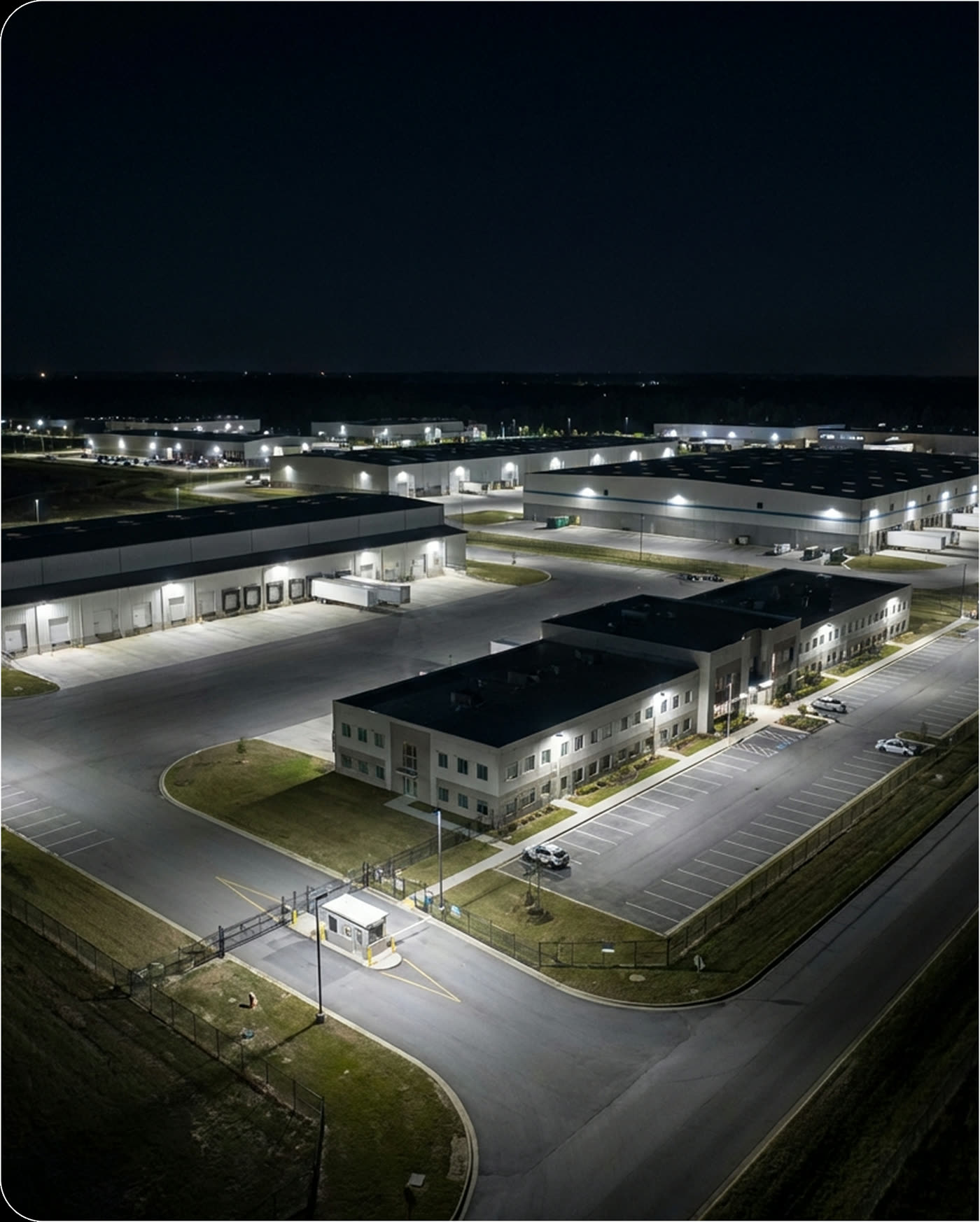
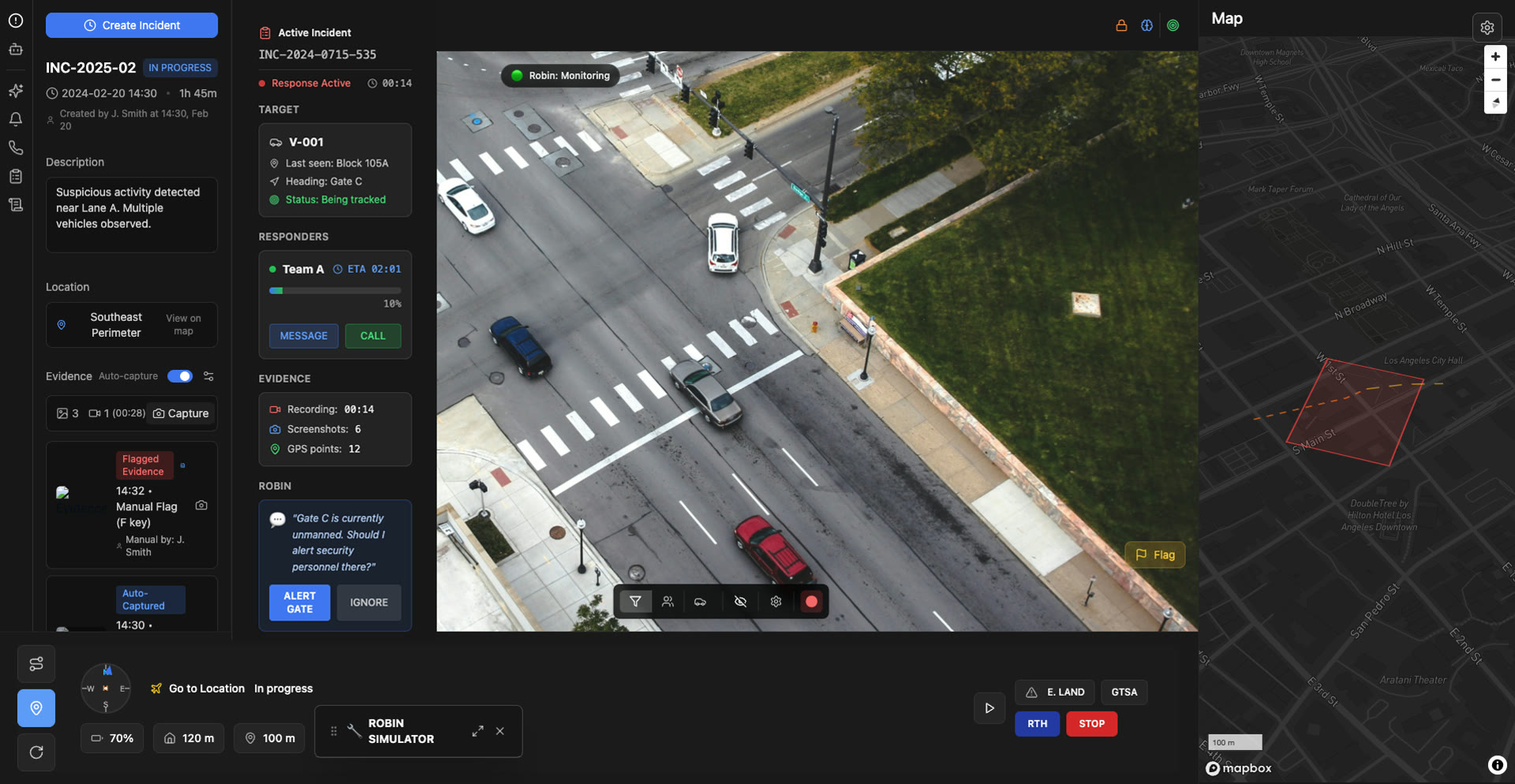
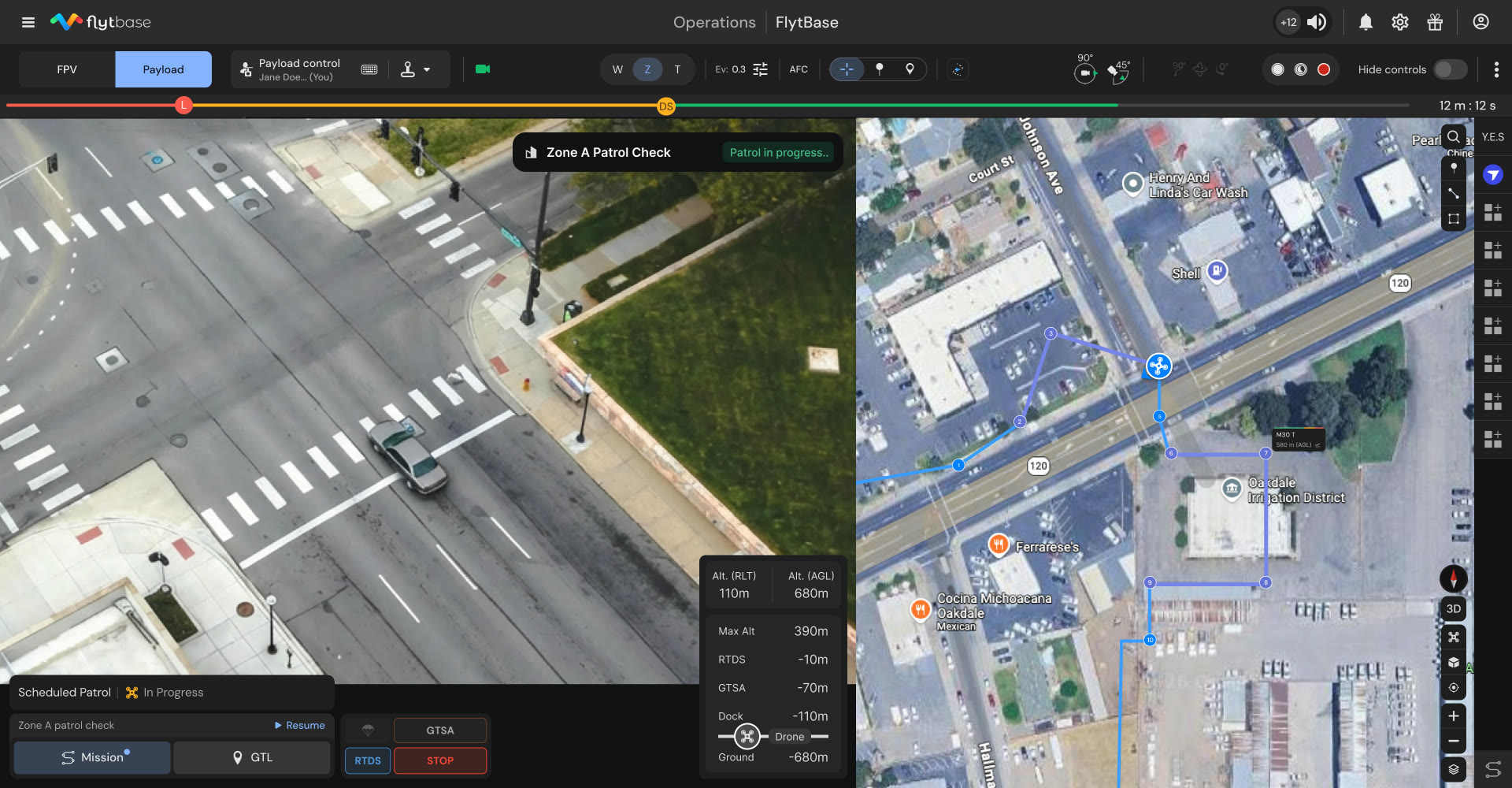
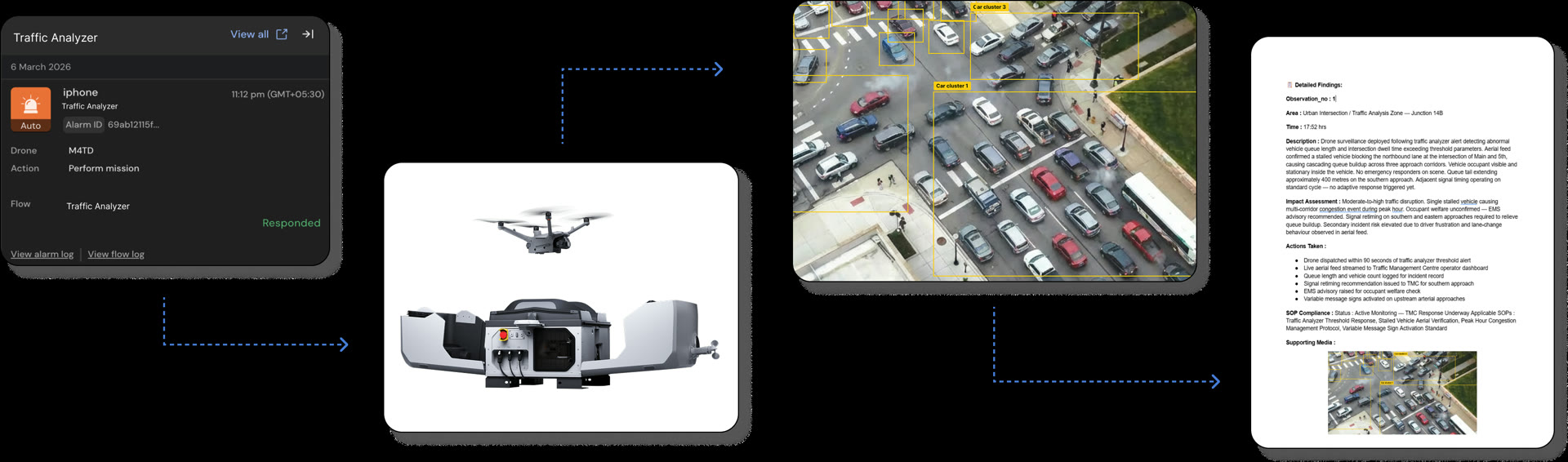
Every layer exists so the next one has something real to work with.
What each role sees.
The same system, surfaced differently depending on who is looking at it — because the question an operator asks at 3am is not the question a CFO asks at budget.
Executive
Risk reduction, investment gates.
Program owner
Rollout plan, roles, training, success metrics.
Operator
Daily workflow, controls, escalation.
IT / legal
Architecture, data, security, compliance.
SSP
Staffing, service model, customer rollout, economics.