

Build a scalabledrone-security business.
A new revenue line for security service providers — not just a way to solve one customer's incident.
One operations centre. Many sites. Many clients.
The thing that makes drone security a business rather than a pilot project is multi-tenancy: separate accounts, separate SLAs and separate reporting, all run by one team from one place. That is an operations architecture, and it's what Secura is built to be.
Lower cost per protected site
Titan Protection, US — $13,000 down to $7,000/month versus two guards on-site.
Operator to site ratio
One certified operations centre covering a portfolio, instead of a roster per contract.
Countries on the platform
Secura runs on FlytBase, deployed well beyond the US-only footprint of most DFR tooling.
What one alarm looks like when you're the provider.
- 01Trigger
The alarm arrives from the client's own system.
Fence sensors, access control, VMS analytics — whatever that site already runs. Each client keeps their stack; you don't standardise them onto new hardware before you can sell them a service.
- 02Verify
One operator answers it, from wherever your ROC is.
The nearest drone at that site launches and streams back. The operator handles it without a vehicle, a call-out or a guard walking a perimeter in the dark — and can be covering another client's site a minute later.
- 03Intervene
Escalate only what's real.
Most alarms aren't. Clearing the false ones from the air is what changes the economics of a contract — fewer dispatches per site, without reducing what the client is actually getting.
- 04Report
The client gets evidence, not an invoice line.
Every response produces a record with footage and timings attached, per account. That's the artefact that renews contracts and justifies the rate — generated automatically rather than written up at end of shift.
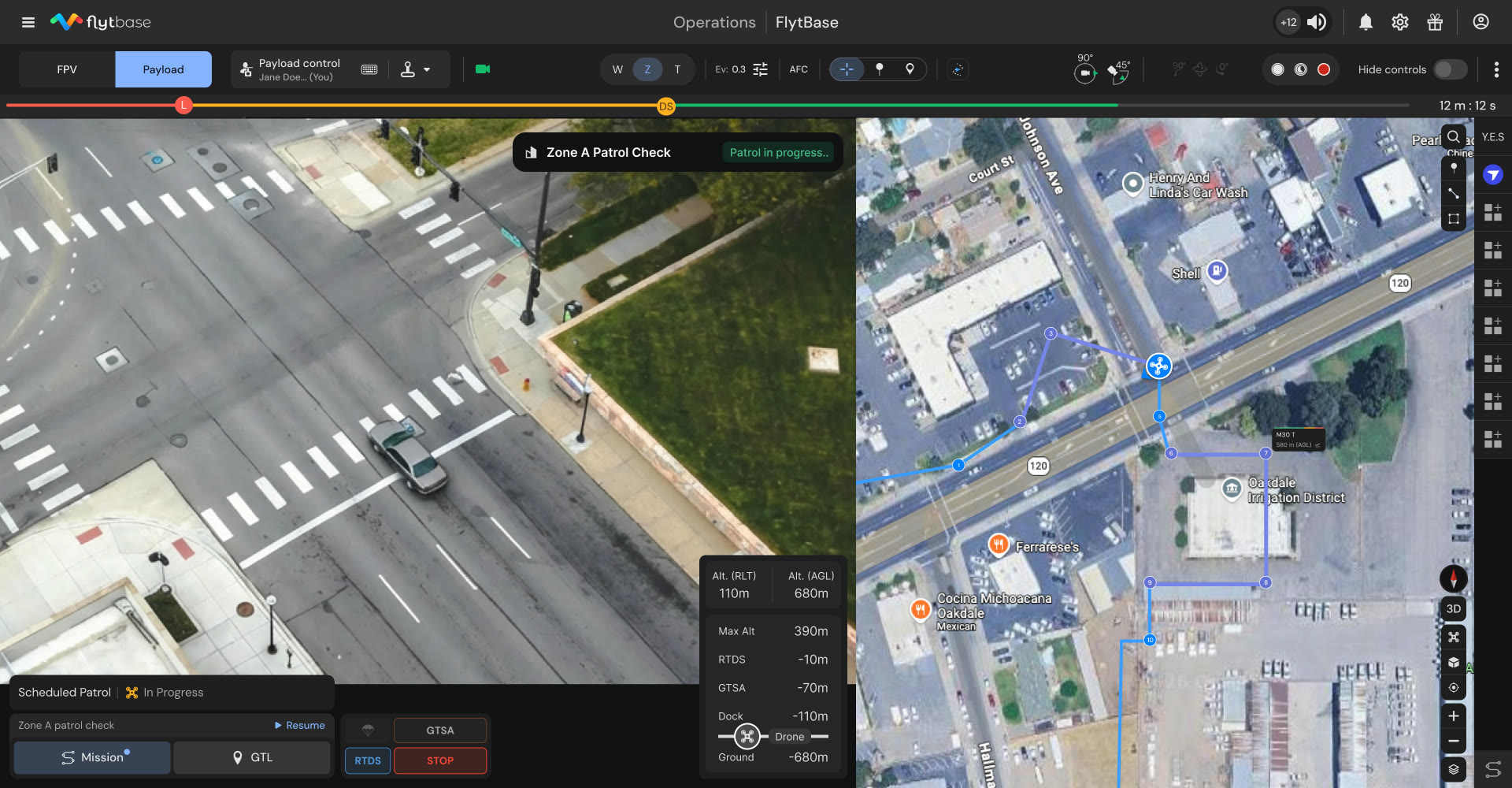
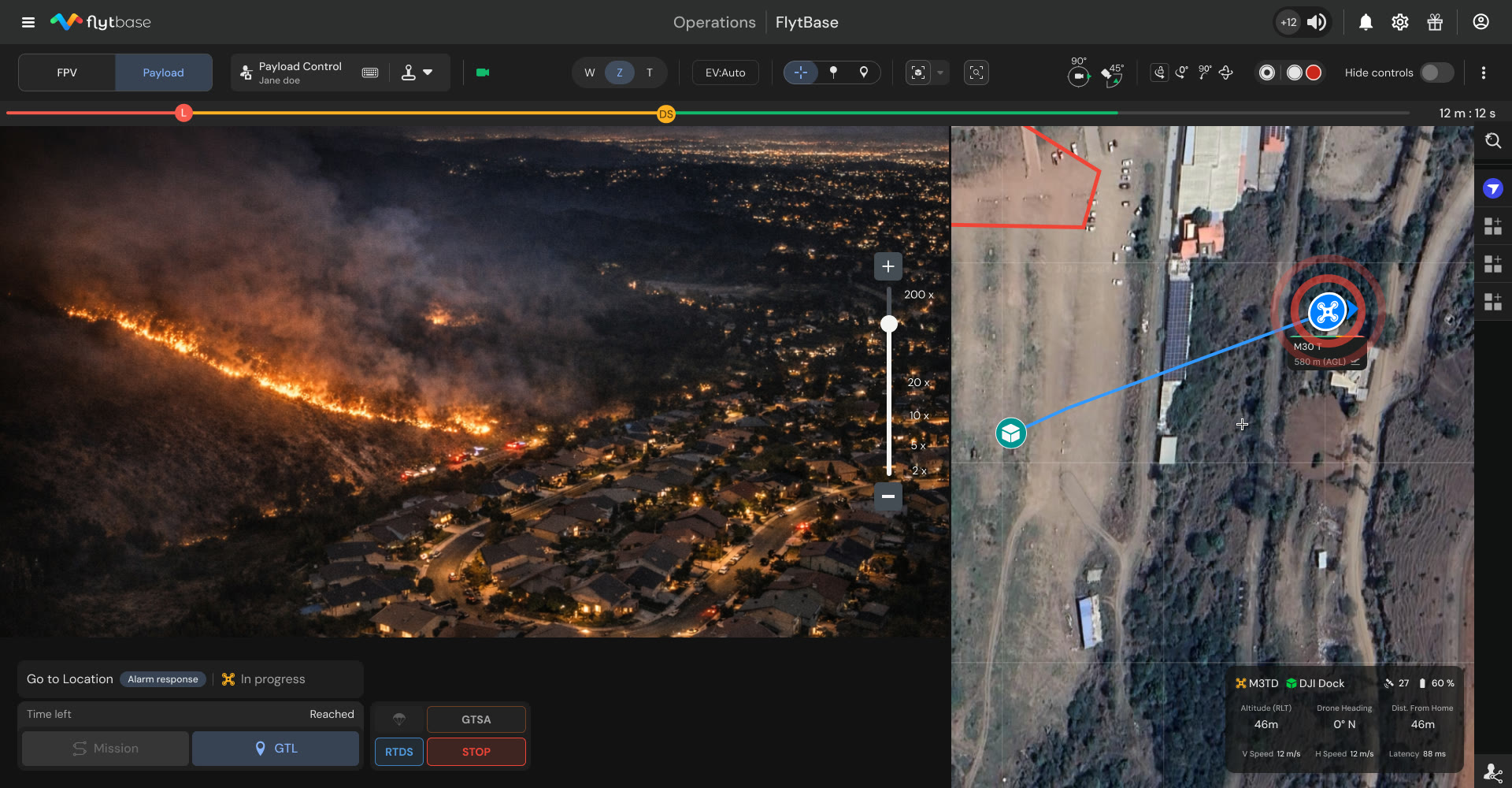
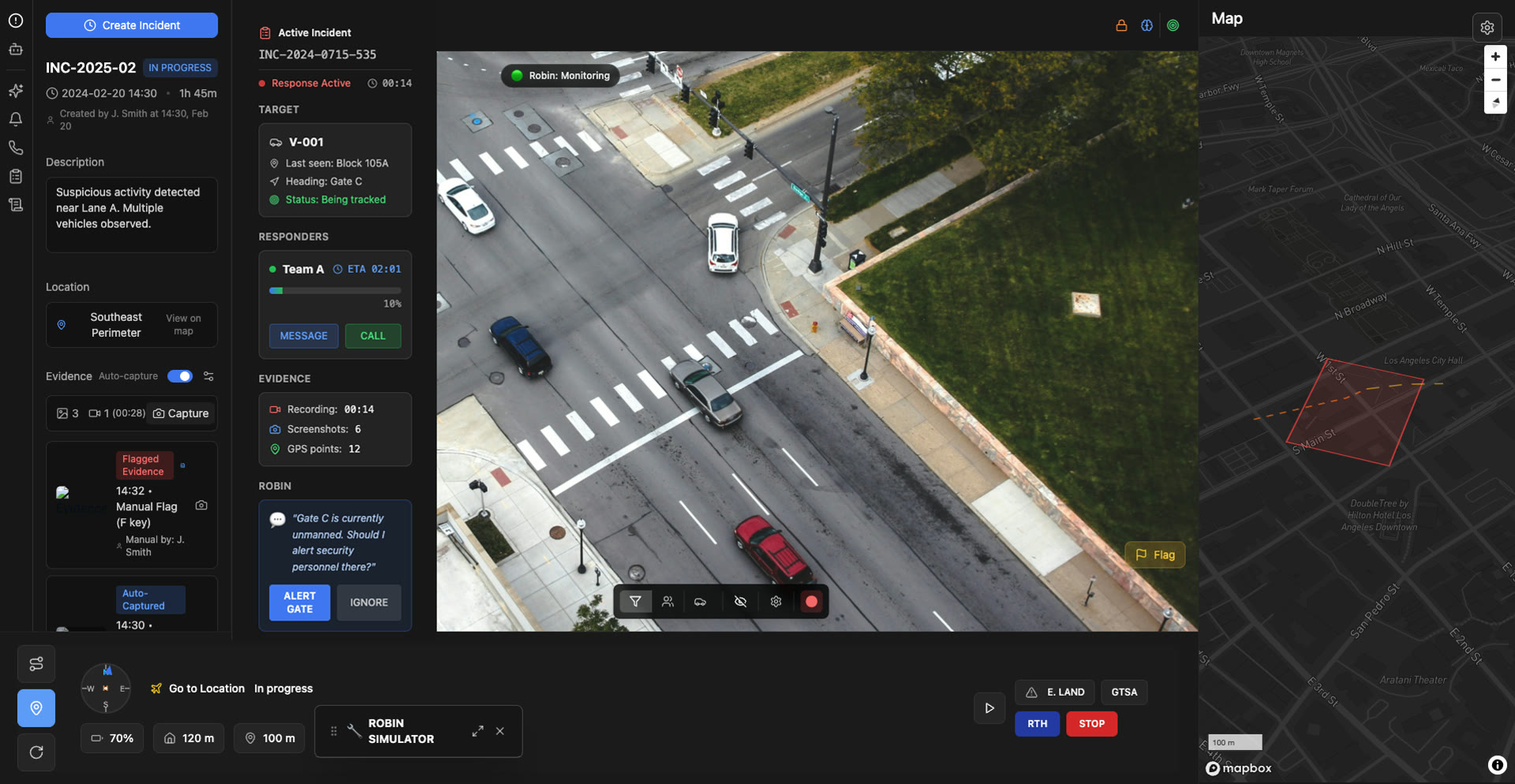
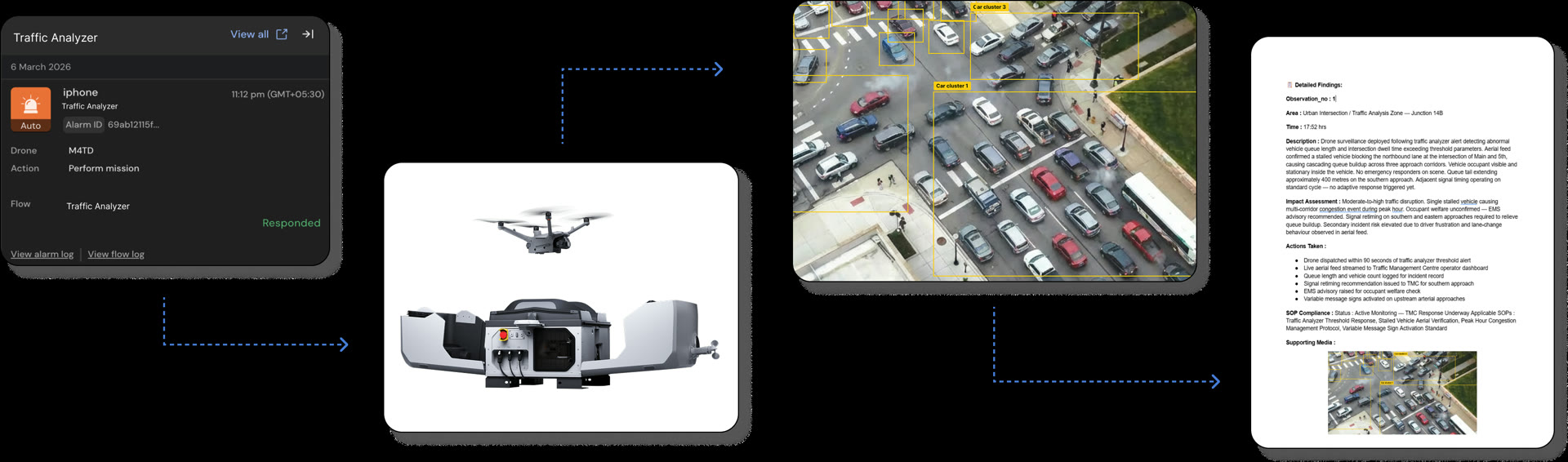
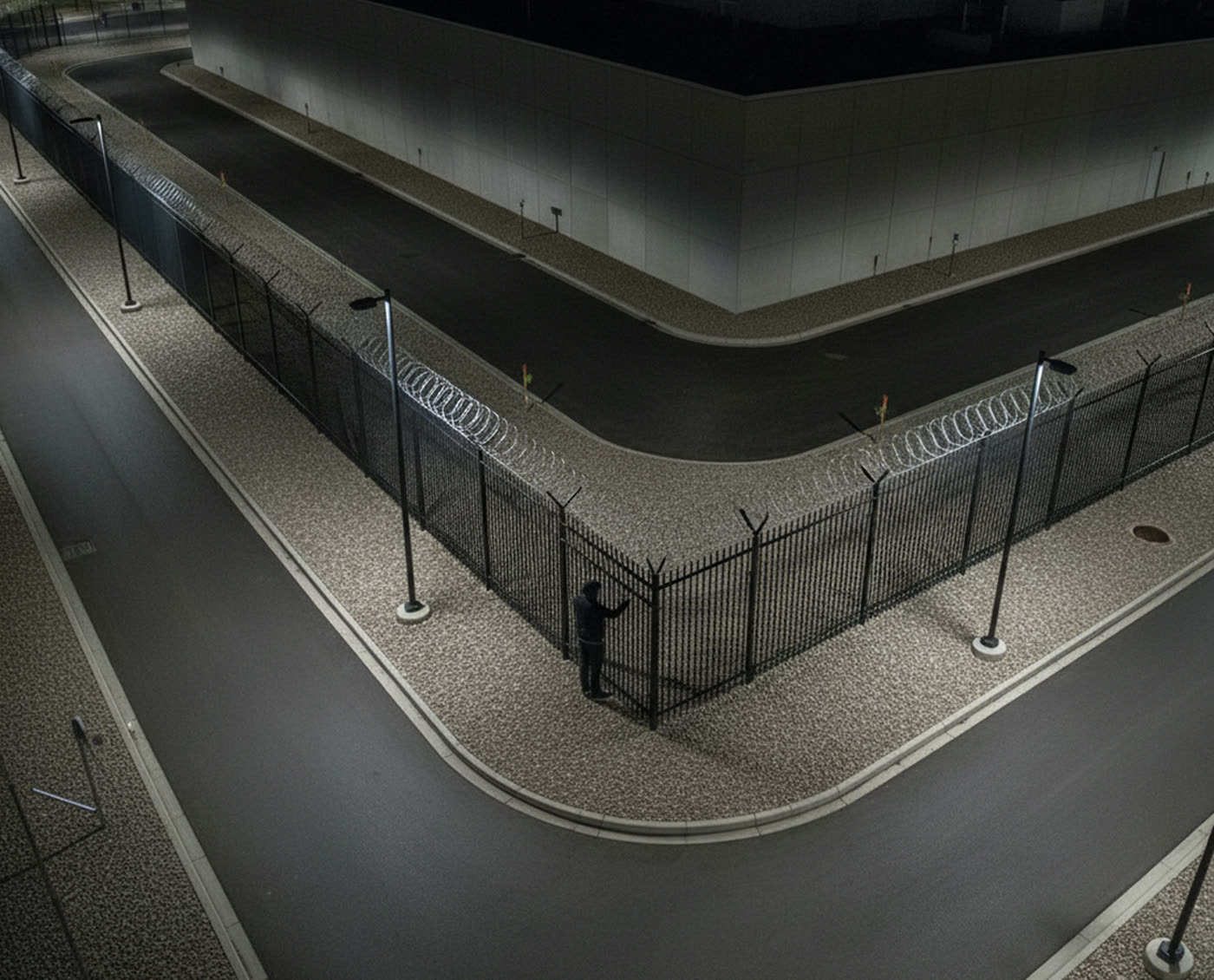
Coverage stops scaling with headcount the moment the response comes from the air.
Security service providers and multi-site enterprise teams.
SSPs, remote guarding companies, security integrators, ROCs, critical infrastructure, campuses, industrial sites and multi-site operators — commercial buyers, contract-based procurement.
Opportunity, workflow, roles and delivery.
The opportunity
A drone-security business-line opportunity for the SSP, not just a tool for one site.
Workflow
Alarm/sensor trigger → aerial verification → remote intervention → escalation → customer report.
Roles
ROC, operator, account-owner and customer-facing workflows, kept distinct.
Delivery models
Customer-operated, partner-operated or managed-service — scoped to how you sell.
The proof standard
Backed by the platform, end to end
Every step of this path runs on a named Secura product — see How It Works and the Platform for what's live today vs. in validation.